
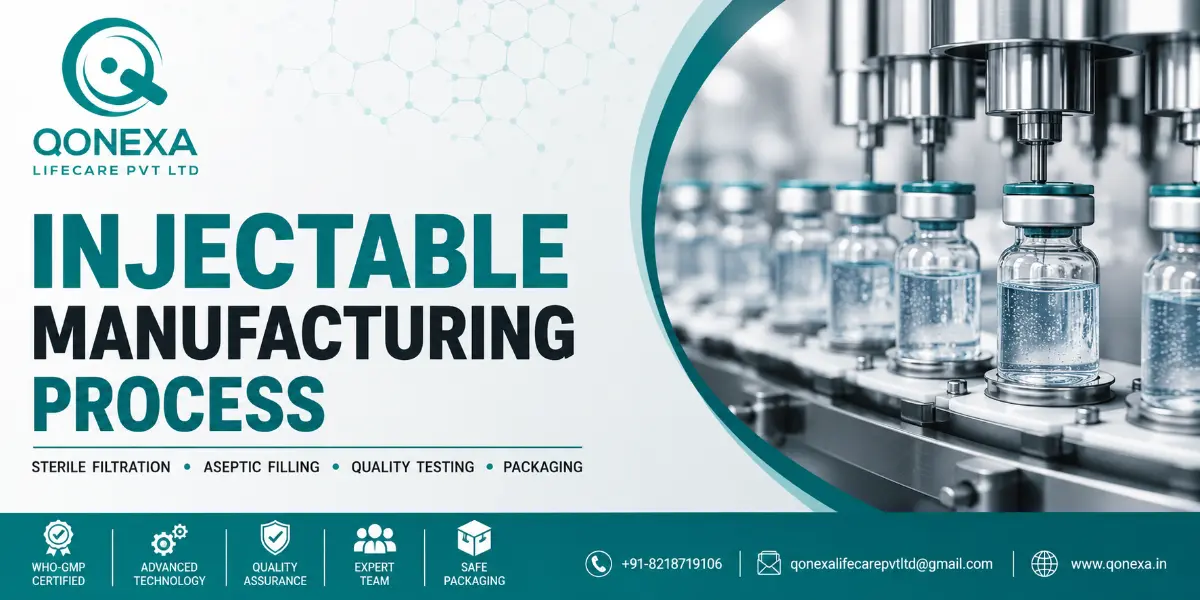
Injectable Manufacturing Process – Complete Guide to Pharmaceutical Injection Production
Injectable manufacturing process is one of the most critical pharmaceutical production systems because injectable medicines are administered directly into the body. These products require strict sterility, precision and quality control standards.
The pharmaceutical injectable manufacturing process includes formulation preparation, sterile filtration, filling, sealing, sterilization, inspection and packaging.
Modern injectable manufacturing facilities operate under WHO-GMP guidelines and stringent cleanroom environments to ensure patient safety.
In this guide, we will explain the complete injectable manufacturing process, equipment used, quality control requirements and pharmaceutical manufacturing best practices.
What is Injectable Manufacturing?
Injectable manufacturing is the pharmaceutical process of producing sterile liquid medicines that are administered through injections.
Advantages of Injectable Medicines
- Rapid therapeutic action
- High bioavailability
- Accurate dosage delivery
- Suitable for emergency treatments
- Effective for patients unable to take oral medicines
- Precise drug administration
Importance of Injectable Manufacturing Process
The injectable manufacturing process requires exceptional control because contamination can directly affect patient health.
Strict sterile procedures help maintain product safety, efficacy and regulatory compliance.
Main Objectives
- Sterility assurance
- Accurate dosage
- Product stability
- Quality assurance
- Regulatory compliance
- Patient safety
Types of Pharmaceutical Injectables
| Type | Description |
|---|---|
| Liquid Injections | Ready-to-use sterile solutions |
| Dry Powder Injections | Reconstituted before use |
| Suspension Injections | Drug particles suspended in liquid |
| Emulsion Injections | Oil-water pharmaceutical systems |
Major Stages of Injectable Manufacturing Process
| Stage | Purpose |
|---|---|
| Raw Material Dispensing | Accurate weighing |
| Solution Preparation | Drug formulation |
| Sterile Filtration | Removal of contaminants |
| Aseptic Filling | Container filling |
| Sealing | Container closure |
| Inspection | Quality verification |
| Packaging | Final packing |
Step 1: Raw Material Dispensing
The first stage of the injectable manufacturing process involves dispensing all active ingredients and excipients according to approved batch manufacturing records.
Materials Used
- Active Pharmaceutical Ingredients (API)
- Purified Water for Injection (WFI)
- Buffers
- Stabilizers
- Preservatives (where applicable)
- Packaging Components
Step 2: Solution Preparation
During this stage, active ingredients are dissolved in Water for Injection under controlled conditions.
Mixing parameters such as temperature, pH and agitation speed are carefully monitored.
Benefits of Proper Solution Preparation
- Uniform drug distribution
- Improved product stability
- Accurate dosage strength
- Enhanced product quality
Step 3: Sterile Filtration
Sterile filtration is one of the most important stages of the injectable manufacturing process.
The prepared solution passes through sterilizing-grade filters to remove microorganisms and particulate contamination.
Why Sterile Filtration is Important
- Maintains sterility
- Removes contaminants
- Improves patient safety
- Supports regulatory compliance
Step 4: Aseptic Filling Process
After sterile filtration, the product is transferred to aseptic filling machines operating inside controlled cleanroom environments.
The injectable manufacturing process requires highly accurate filling systems to ensure dosage consistency.
Benefits of Aseptic Filling
- Maintains sterility
- Accurate fill volume
- Reduces contamination risk
- Improves product quality
Step 5: Sealing and Container Closure
Once filled, vials, ampoules or prefilled syringes are sealed immediately to maintain product sterility.
Container Types
- Glass Vials
- Ampoules
- Prefilled Syringes
- Cartridges
Step 6: Visual Inspection
All injectable products undergo visual inspection to detect any defects before release.
Inspection Parameters
- Particulate Matter
- Container Defects
- Fill Volume Accuracy
- Seal Integrity
- Product Appearance
Step 7: Quality Control Testing
Quality testing is a mandatory stage of the injectable manufacturing process.
Important Quality Tests
- Sterility Test
- Bacterial Endotoxin Test
- pH Test
- Assay Test
- Particulate Matter Test
- Leak Test
- Stability Testing
Equipment Used in Injectable Manufacturing Process
| Equipment | Function |
|---|---|
| Stainless Steel Mixing Tank | Solution preparation |
| Water For Injection System | Purified water generation |
| Sterile Filtration Unit | Contamination removal |
| Aseptic Filling Machine | Sterile filling |
| Vial Washing Machine | Container cleaning |
| Autoclave | Sterilization |
| Inspection Machine | Product inspection |
WHO-GMP Standards in Injectable Manufacturing
WHO-GMP compliance is essential because injectable medicines directly enter the bloodstream and require the highest quality standards.
WHO-GMP Requirements
- Cleanroom Operations
- Sterility Assurance
- Process Validation
- Equipment Qualification
- Personnel Training
- Documentation Control
Common Challenges in Injectable Manufacturing
- Microbial Contamination
- Particulate Contamination
- Container Closure Defects
- Sterility Failures
- Fill Volume Variations
- Stability Issues
Advanced pharmaceutical manufacturing systems help minimize these risks and improve production efficiency.
Why Choose Qonexa Lifecare for Injectable Manufacturing?
Qonexa Lifecare provides reliable pharmaceutical manufacturing solutions supported by modern infrastructure and WHO-GMP compliant production systems.
Our Strengths
- WHO-GMP Manufacturing Standards
- Advanced Production Facilities
- Strict Quality Control Systems
- Third Party Manufacturing Support
- Wide Product Portfolio
- PCD Pharma Franchise Opportunities
- Pan India Business Support
📞 +91-8218719106
📧 qonexalifecarepvtltd@gmail.com
Explore Ayurvedic Manufacturing with Qonexa Veda
For Ayurvedic and herbal manufacturing solutions, businesses can also explore Qonexa Veda.
Qonexa Veda specializes in Ayurvedic third party manufacturing, herbal formulations, capsules, syrups and franchise opportunities across India.
Useful Links
Frequently Asked Questions
Conclusion
The injectable manufacturing process is one of the most demanding pharmaceutical production systems, requiring strict sterility controls, advanced equipment and comprehensive quality testing.
Understanding the complete injectable manufacturing process helps pharmaceutical professionals and businesses appreciate the high standards required to manufacture safe and effective injectable medicines.