
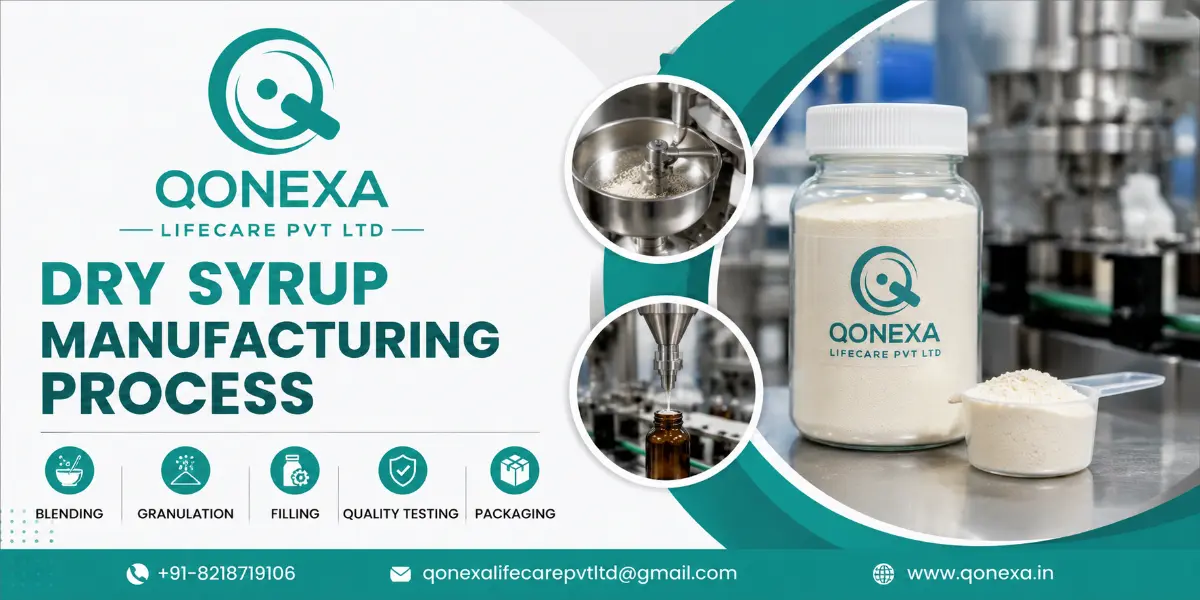
Dry Syrup Manufacturing Process – Complete Guide to Pharmaceutical Dry Syrup Production
The dry syrup manufacturing process is widely used for producing antibiotic and pediatric formulations. Dry syrups offer excellent stability, easy transportation and longer shelf life compared to ready-to-use liquid formulations.
A properly controlled dry syrup manufacturing process ensures dosage accuracy, product consistency and regulatory compliance. Modern pharmaceutical facilities follow WHO-GMP standards to maintain quality at every stage.
What is Dry Syrup Manufacturing?
Dry syrup manufacturing is the process of producing powdered pharmaceutical formulations that are mixed with water before administration.
Advantages of Dry Syrups
- Longer shelf life
- Improved stability
- Easy transportation
- Suitable for pediatric use
- Accurate dosage preparation
Importance of Manufacturing Controls
The dry syrup manufacturing process requires strict quality control to maintain uniformity, effectiveness and product stability.
Main Objectives
- Uniform ingredient distribution
- Consistent product quality
- Patient safety
- Regulatory compliance
- Batch consistency
Major Production Stages
| Stage | Purpose |
|---|---|
| Raw Material Dispensing | Accurate weighing |
| Blending | Uniform mixing |
| Granulation | Particle formation |
| Drying | Moisture control |
| Filling | Bottle filling |
| Quality Testing | Product verification |
Step 1: Raw Material Dispensing
The first stage of the dry syrup manufacturing process involves accurate weighing of active pharmaceutical ingredients and excipients according to approved batch records.
- Active Pharmaceutical Ingredients (API)
- Sucrose
- Flavoring Agents
- Coloring Agents
- Preservatives
- Stabilizers
Step 2: Blending Process
All ingredients are blended using pharmaceutical mixers to achieve uniform distribution throughout the batch.
A controlled dry syrup manufacturing process ensures accurate dosage and consistent product quality.
Step 3: Granulation Process
Granulation improves flow properties and helps achieve smooth filling performance.
This stage is an important part of the dry syrup manufacturing process because it improves product uniformity and long-term stability.
Step 4: Drying Process
After granulation, the material is dried under controlled conditions to achieve the desired moisture level. Proper drying helps improve product stability and shelf life.
Benefits of Drying
- Moisture Control
- Improved Stability
- Better Flow Properties
- Enhanced Product Quality
Step 5: Sieving and Sizing
After drying, the granules are passed through sieves to achieve uniform particle size distribution.
This stage helps maintain consistency throughout the dry syrup manufacturing process.
Step 6: Bottle Filling Process
The finished powder blend is filled into pharmaceutical-grade bottles using automated filling machines.
Packaging Materials
- HDPE Bottles
- Amber Bottles
- Child Resistant Caps
- Measuring Cups
Step 7: Quality Control Testing
Quality testing is one of the most important stages of the dry syrup manufacturing process. Every batch is tested before market release.
Important Tests
- Assay Testing
- Moisture Content Testing
- Particle Size Analysis
- Microbial Testing
- Bulk Density Testing
- Stability Studies
Equipment Used in Dry Syrup Manufacturing
| Equipment | Function |
|---|---|
| Dispensing Booth | Raw material dispensing |
| Blender | Uniform mixing |
| Granulator | Granule formation |
| Fluid Bed Dryer | Drying process |
| Vibro Sifter | Particle sizing |
| Bottle Filling Machine | Powder filling |
| Labeling Machine | Product labeling |
WHO-GMP Requirements
The dry syrup manufacturing process must comply with WHO-GMP standards to ensure product quality and patient safety.
- Process Validation
- Equipment Qualification
- Personnel Training
- Quality Assurance Systems
- Documentation Control
- Hygiene Compliance
Common Manufacturing Challenges
- Moisture Variations
- Segregation Issues
- Flowability Problems
- Content Uniformity Issues
- Packaging Defects
- Stability Challenges
Why Choose Qonexa Lifecare?
Qonexa Lifecare provides high-quality pharmaceutical manufacturing solutions supported by modern facilities and WHO-GMP compliant production systems.
- WHO-GMP Manufacturing Standards
- Advanced Production Infrastructure
- Strict Quality Control Systems
- Third Party Manufacturing Support
- PCD Pharma Franchise Opportunities
- Pan India Business Network
📞 Phone: +91-8218719106
📧 Email: qonexalifecarepvtltd@gmail.com
Explore Ayurvedic Manufacturing with Qonexa Veda
Businesses looking for Ayurvedic and herbal manufacturing solutions can also explore Qonexa Veda.
Qonexa Veda specializes in Ayurvedic products, herbal formulations, third party manufacturing and franchise opportunities across India.
Useful Links
Frequently Asked Questions
Conclusion
The dry syrup manufacturing process involves multiple controlled stages including dispensing, blending, granulation, drying, filling and quality testing. Proper manufacturing practices ensure product safety, stability and effectiveness.
Understanding the complete dry syrup manufacturing process helps pharmaceutical businesses maintain quality standards and deliver reliable products to the market.
For official pharmaceutical regulations and manufacturing guidelines, visit CDSCO Official Website .